How Smart Travelers Prepare for Flight Delays
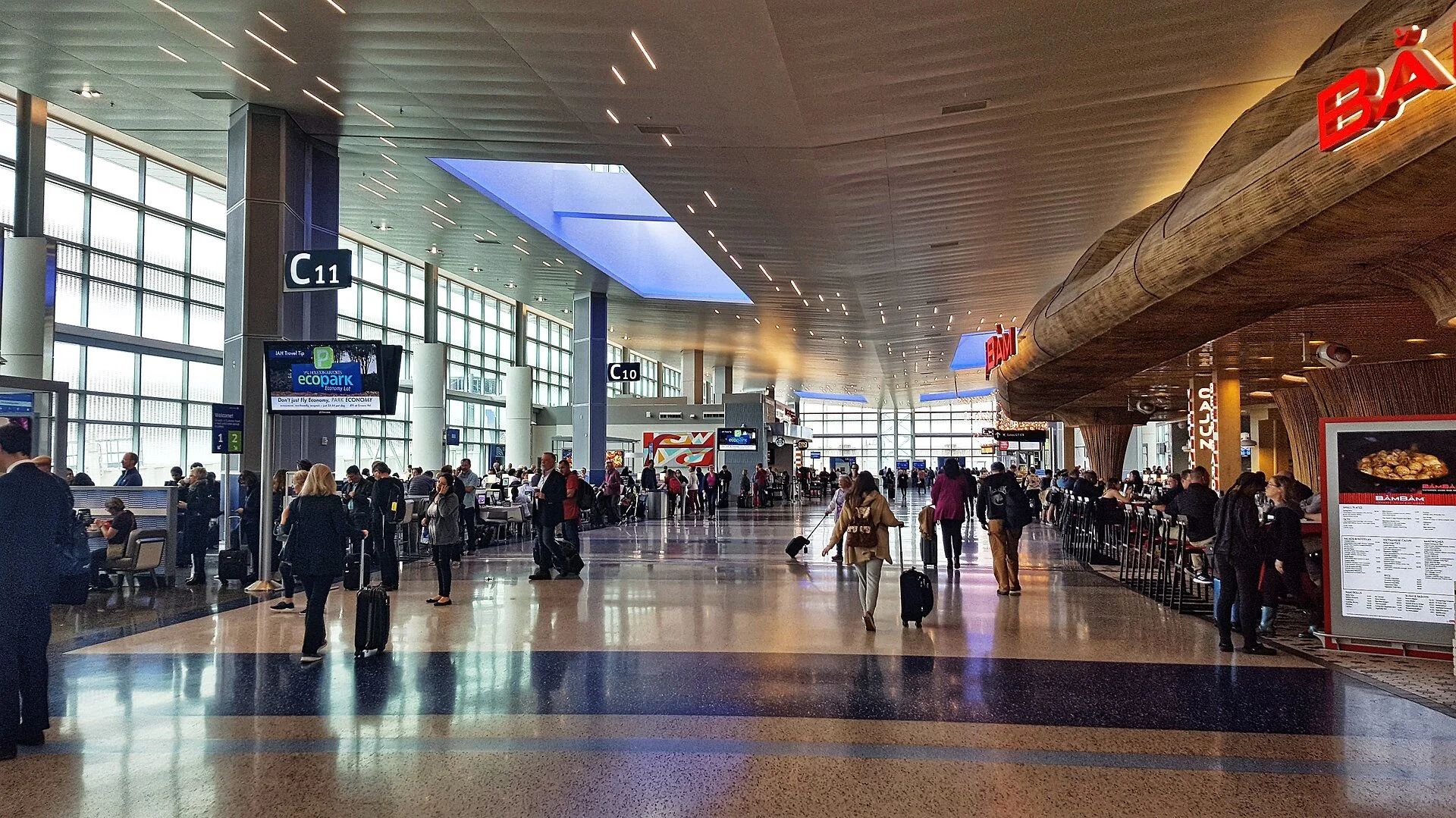
Photo credit: Pimpinellus/Wikimedia Commons
This step-by step approach — from booking through post-flight — empowers airline passengers at every stage of their trip.
Your next flight could be upended by issues completely out of your control, including government funding of the Department of Homeland Security and the Transportation Security Administration, severe weather like blizzards and hurricanes, and staff shortages in security and air-traffic control.
What is in your control is how you prepare for a disrupted flight before it happens.
Here’s your step-by-step guide, based on conversations with flight attendants and my own experience as a frequent flier across major U.S. hubs, for managing delays and cancellations in real time.
BOOKING
Make choices that reduce your risk of a flight delay.
You know that warm and fuzzy feeling you get when you’re looking forward to a trip? Put that on hold before you book your flight. Successfully managing flight delays means anticipating trouble long before it happens.
But booking smart is one of the easiest — and fairly obvious — ways to set yourself up for success:
Choose early-morning flights. They are far less likely to be disrupted by the cascade of delays that can plague later flights.
Avoid tight connections. This is where sunny optimism can get you in the most trouble. Assume you’ll need some buffer time to make that connecting flight.
Book nonstop when possible. While nonstop can sometimes be a bit pricier, it can be worth the peace of mind.
Select an aisle seat near the front of the plane. This is optional, of course, and available only if you’re willing to pay a fee or a higher fare, but if deplaning quickly matters to you, lock in that seat at booking.
PACKING
Carry-on packing matters more than you think.
You’ve heard this one before: Pack essentials in your carry-on in case your checked bags get misplaced or delayed. But it also applies to flight delays and cancellations, where you may find yourself spending way more time at the airport than you anticipated.
An essential packing list should include:
Devices like phones, tablets, and laptops, plus charging cords and power banks.
A change of clothes and toiletries.
Prescription medications (but keep them in their original pharmacy packaging to prevent holdups going through security).
Healthy snacks like nuts, dried fruit, and protein bars.
Chocolate (no, it’s not for you — more about that later).
PREFLIGHT
The 24 hours before your flight are a critical time to arm yourself with information.
In addition to mobile check-in and seat selection or confirmation:
Ensure you’ve installed the airline’s app on your phone and turn on alerts and SMS notifications.
Check the weather — at home, at any connecting airport, and at your destination (severe weather in any one of those locations will likely affect your travel plans).
Look up where your aircraft is coming from, using the airline’s app, Google Flights, FlightAware or FlightRadar24. If that flight is delayed, yours may be as well — and you’ll know it before most of your fellow passengers.
Confirm any credit card or insurance coverage you may have that covers flight delays and/or cancellations. (Travel insurance is a world unto itself, with pros and cons beyond the scope of this article, but if you have it, you should familiarize yourself with what it covers and doesn’t cover.)
Download the airport’s app (you’ll need it on the day of your flight).
AT THE AIRPORT
Be the best informed — and the nicest — traveler in the terminal.
This is where it gets real. I’m going to assume you’re savvy enough to arrive at the airport at least two hours before your flight. And if you’ve followed the preflight advice above, you’re ready to react in real time to whatever comes your way:
Breeze through security. Use the airport’s app (which you should have downloaded the day before your flight) to find out which security checkpoints have the shortest lines. (Most travelers don’t know they have a choice of security checkpoints, and it can seriously reduce anxiety and hassle.)
Keep up with the weather. Just like you did preflight, continue to monitor the weather at your airport, your destination, and any connecting airports, and track the incoming aircraft. If you see serious weather and/or delays, now may be the time to consider rebooking.
Trust the airline’s app and SMS notifications more than you trust airport signage — I’ve experienced firsthand that gates and projected departure and arrival times get updated on the app (and often on Google Flights) sooner than they do on airport signage. And if you decide to rebook your flight, start with the airport app, which should offer a fairly seamless process.
Be nice! If, despite taking all the steps recommended here, you end up having to wait in a long line of grouchy travelers to talk to a frazzled gate agent: Keep your cool, model empathy (“I know this delay isn’t your fault”), and remember the chocolate I told you to pack in your carry-on. My family and I have sweetened conversations with gate agents — quite literally — by offering them much-appreciated treats.
Consider other transportation options. When facing a flight delay, it’s easy to forget in the heat of the moment that you may be able to get to your destination via Amtrak or rental car.
Document any delay for post-flight action. Take screenshots of delay or cancellation notifications, reasons given, your original flight itinerary, and receipts for unexpected expenses related to your delay, such as food, lodging, and ground transport.
ON THE PLANE
Listen for clues that reveal impending delays.
If you’ve successfully boarded your plane on time, two cheers:
Remain alert for announcements such as “We’re waiting for crew” or “We’re finishing up some paperwork,” especially if weather conditions along your route are dicey.
Continue to take screenshots of any notifications you receive.
Prepare for your next connection. If you have a connecting flight, download that airport’s app and get to know your options for navigating your way to the gate. Be prepared to repeat the “At the Airport” tips above when you deplane.
THE ENDGAME
Recover costs if your flight was significantly delayed or canceled.
If your flight is canceled — or if you chose not to fly due to a significant delay — you are entitled to a refund for the unused portion of your ticket.
It’s much more difficult to get an airline to reimburse you for other expenses related to a flight cancellation or significant delay, such as ground transportation, food, and lodging. but it is always worth pursuing. (That’s why I recommended that you document all your notifications and transactions with screenshots).
If your flight is significantly delayed and you chose to fly anyway, there is no guaranteed reimbursement. You can file a complaint with the U.S. Department of Transportation, but manage your expectations. The process can be long.
And, as noted above, if you have some form of trip insurance through your credit card or a travel insurance policy, you should pursue reimbursement.
TALK TO ME!
I’d love to hear how this content helped you — you can reach me at robertfirpocappiello@gmail.com. And check out my portfolio of writing about travel/hospitality and health/lifestyle.